
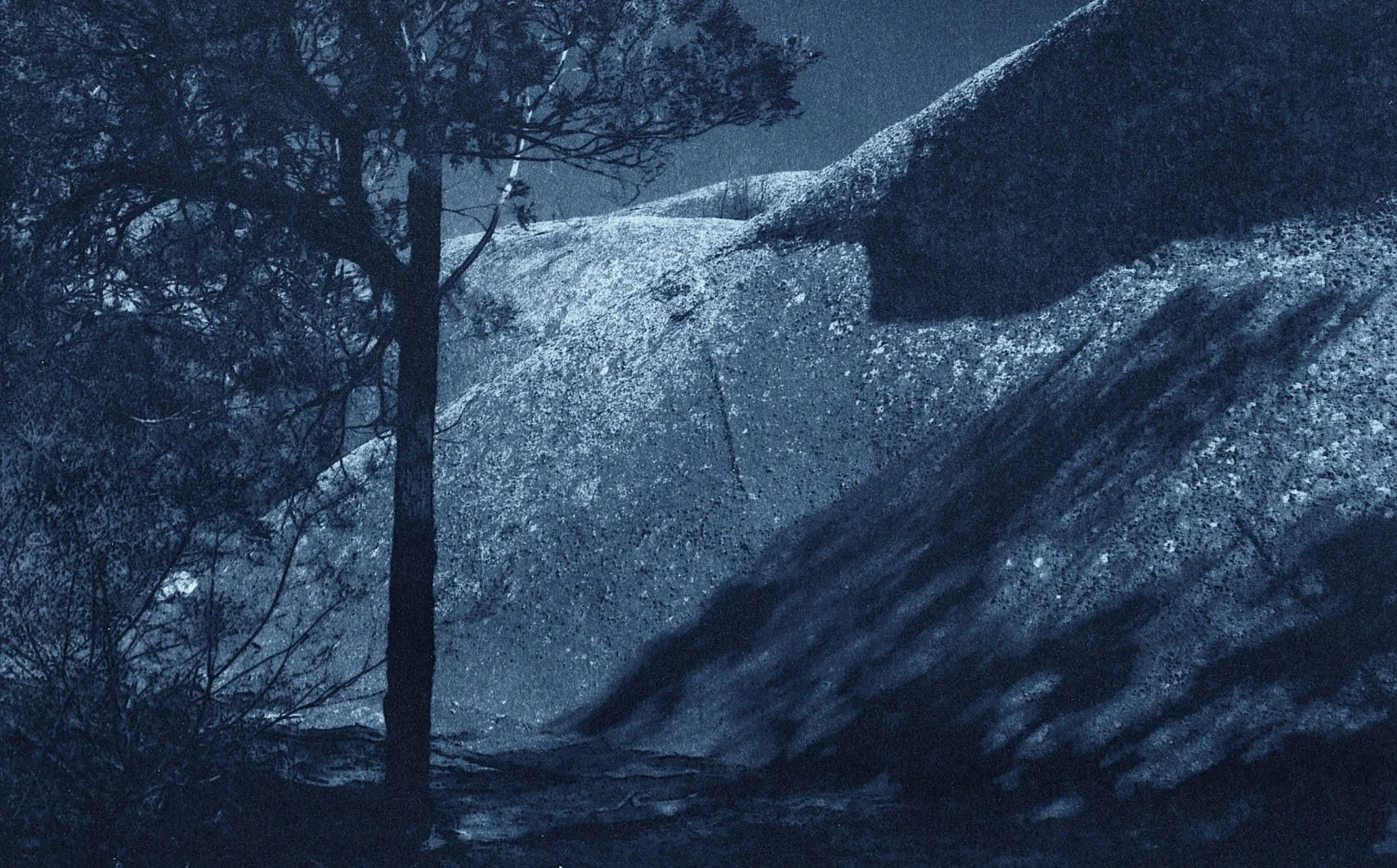
24x15.5cm Classic Cyanotype from TruNeg Negative

Copy of 28 x 18.1 cm Carbon Print with Oxide Black pigment made with a TruNeg Negative
The Authentic Digital Negative and why the Inverted Image Fails
Before going into why the editing program’s negative doesn’t work, a true digital negative needs to be defined.
By convention, the standard photographic negative, whether analog or digital, records a brightness range of eight stops, that is, the brightness doubles eight times, once for each stop, from the darkest to the brightest recorded tones.
The silver gelatin negative, for the most part, increases in density by regular amounts for each stop increase in the subject brightness.
In the 16-bit positive digital image, RGB 17 is considered the first discernible tone from black, and pixel values increase from 16 to 255 by a factor of 1.41 for each stop change in exposure.

If the positive image increases by a factor of 1.41 for each stop, then for a negative to be an exact inversion of the positive image, it has to decrease from 255 to 16 by a factor of 1.41 for each stop.

The true digital negative image of the digital positive is an image in which the pixel values decrease by a constant factor for each stop increase in exposure.
The True Digital Negative
Why the Inverted Negative Fails
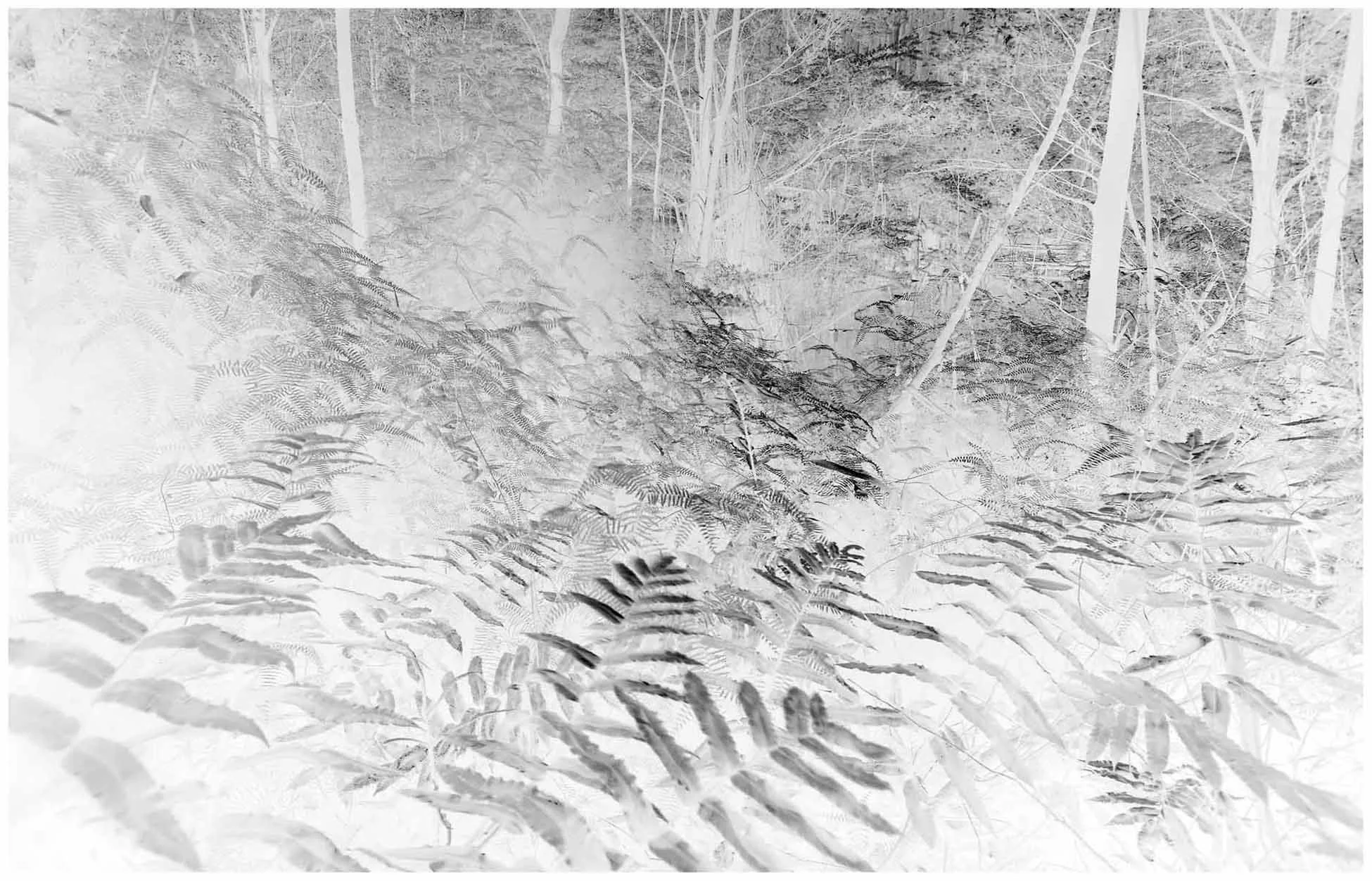
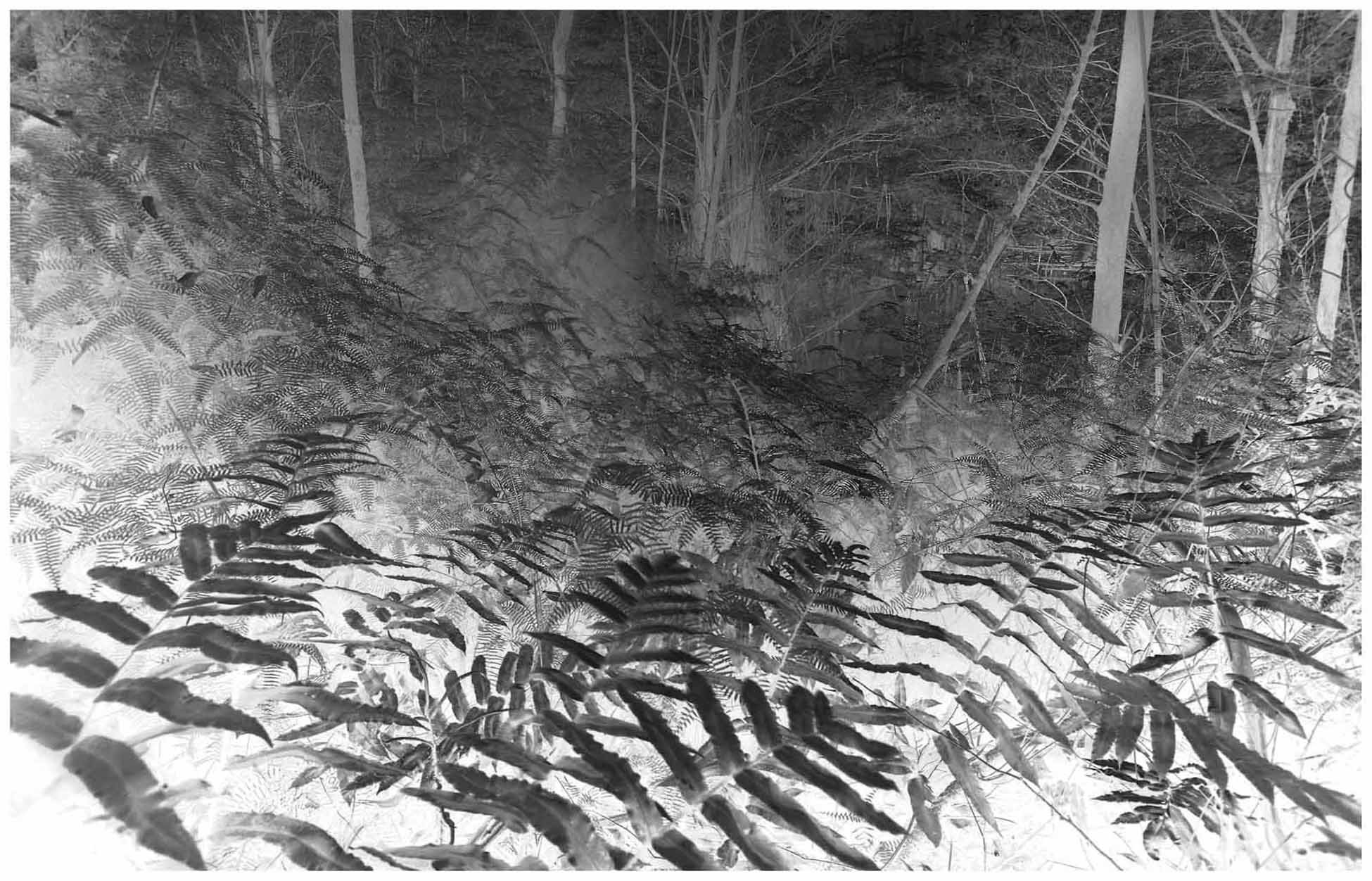
Incorrectly inverted negative showing “underexposed” shadows and truncated highlights
The traditional inverted negative fails because the photo editing programs invert the image by subtracting the positive pixel value from 255.
This creates a negative with small, uneven changes in the shadows and midtone stops, and large changes in the highlights, resulting in faint, low-contrast shadows and midtones and excessive contrast in the highlights of inverted negatives.

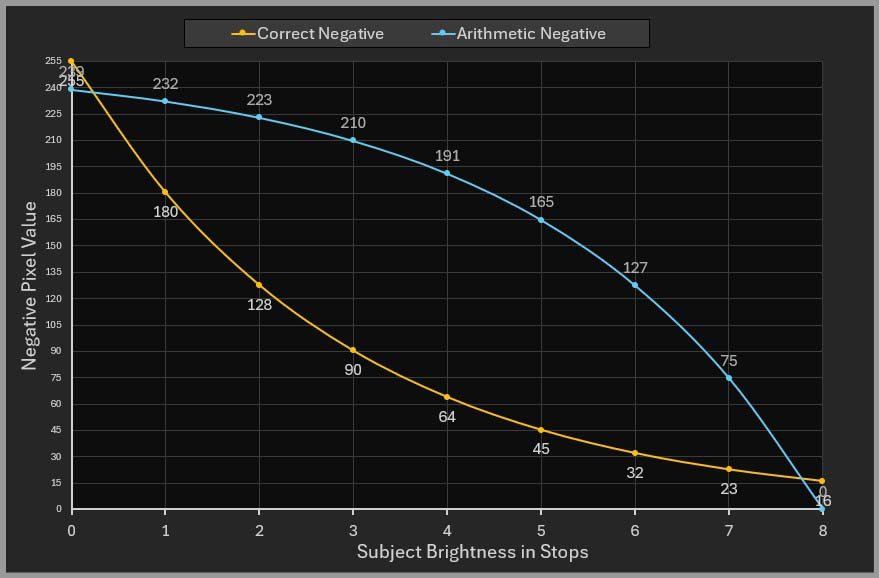
Plotting the inverted negative in blue against the correct negative in yellow shows the extent of the problem
The Authentic Digital Negative
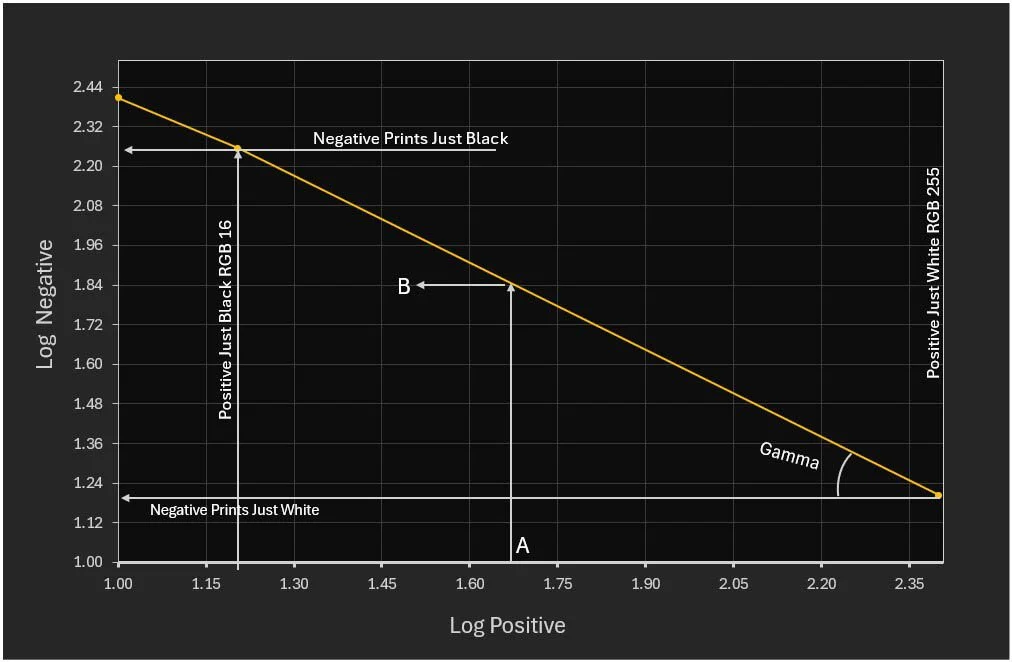
If instead of using scalar values, the logarithms of the stop inputs are plotted against the logarithms of the negative, the graph becomes a straight line, creating an inverse proportion between the positive and negative logarithms, allowing the negative value of any pixel to be readily calculated.
Logarithmically inverted negative showing the full range of shadow and highlight tones