Carbon (A. Dichromate)
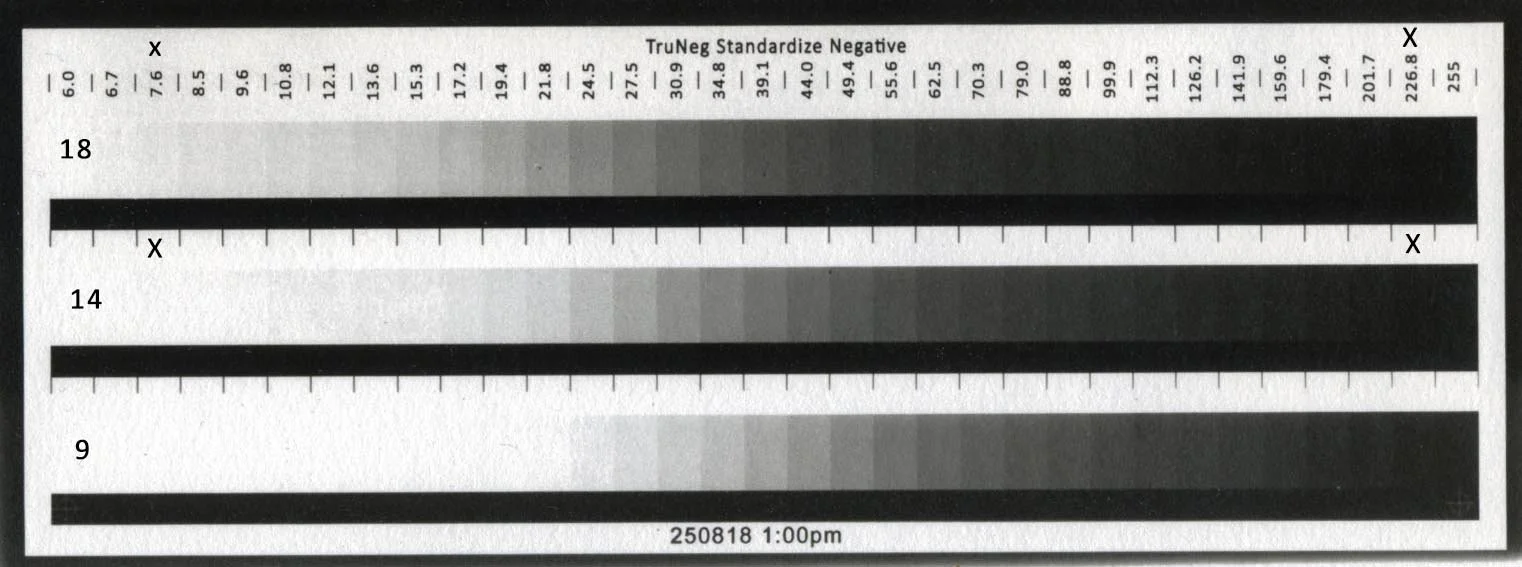
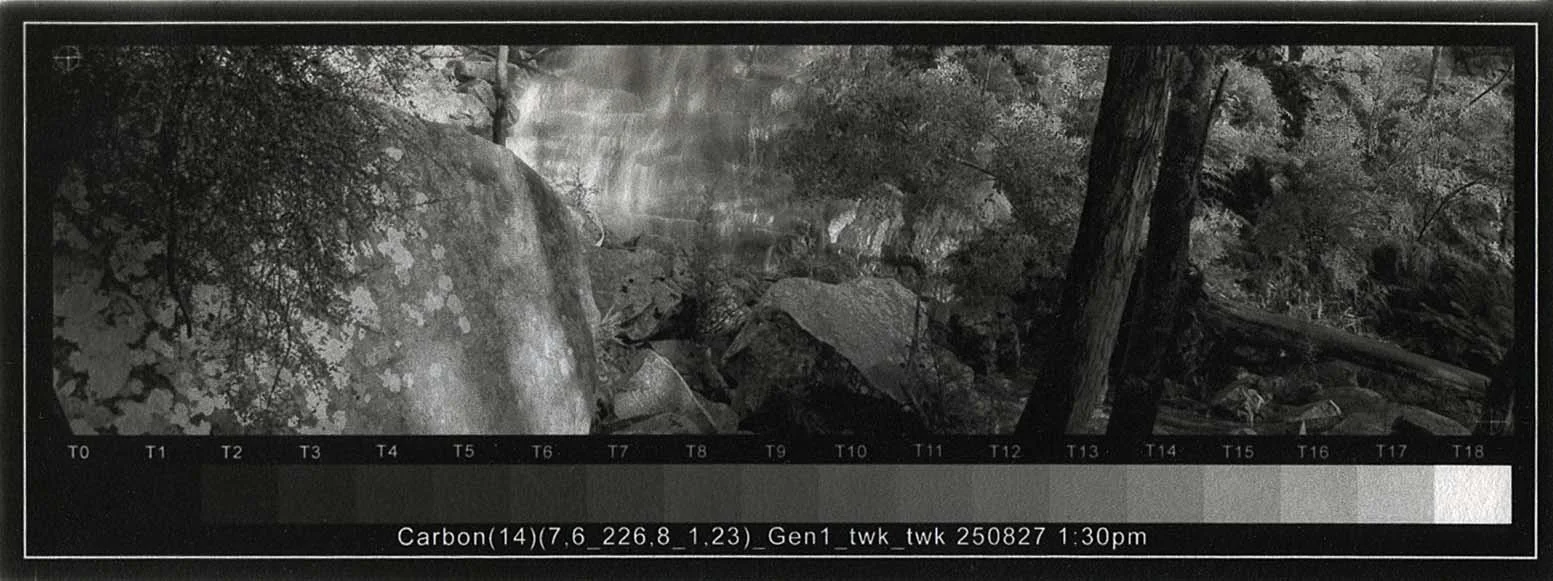
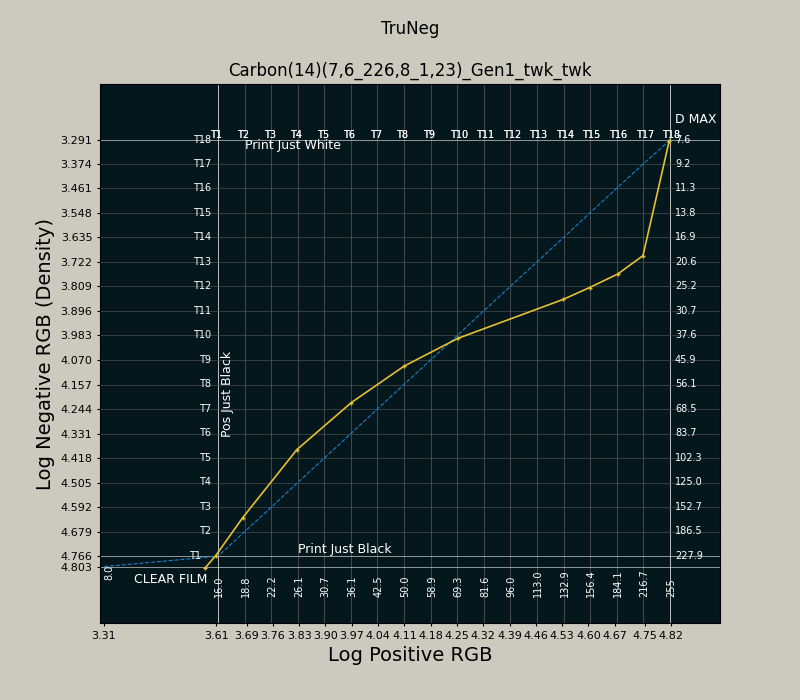
The carbon tests were performed with a single negative printed on the Canon iP8760 printer. At the 14-minute exposure, there is just enough negative contrast. The calibration print shows a very long flat, what could be called a pre-toe, from 7.6 to 17.1, followed by a smooth toe and generally regular gradation through to Dmax at 226.8. This is reflected in the plot, where the T17 input is pulled down to the negative T13, followed by a relatively smooth and even curve through to Dmax. However, the highlight tones are so light that any step up to 17.3 could probably be used as the white point.
The sensitising technique used is unusual; 0.5 ml of 5% Ammonium Dichromate is added to 20 ml of 10% gelatin before coating the 9x4 inch Yupo tissue. It is then dried overnight in a low-humidity cabinet. How this equates to soaking in 5% sensitiser is unclear, but if it were assumed that the gelatin on a 9x4 piece of dry tissue absorbed half a millilitre of 5% sensitiser, they could be considered equivalent.
The concentration of the dichromate sensitiser is well known to alter speed and contrast, but its effect on the shape of the DlogE curve remains uncertain; however, the profile should provide a solid starting point under most circumstances.
Some user’s experience suggests that the Carbon curve can be used for Gum Bichromate.